Showing posts with label innovation. Show all posts

TECH AND INNOVATION LEARNING


In the digital age, business leaders must stay on top of new, emerging, and future technologies or risk falling behind. But where do you start? Explore the latest digital trends to determine the best opportunities for your company.

Big Data
Big Data continues to explode in volume and variety, and companies must keep up. Learn about the latest Big Data tech trends, including real-time analytics and AI – and find out what they can do for business. 

Blockchain

Blockchain has the potential to majorly disrupt every industry. This distributed ledger technology goes far beyond cryptocurrencies to include everything from land titles and intellectual property to votes. 

Cloud Computing

From SaaS and PaaS to private and hybrid – learn more about cloud technology and its benefits. You can also investigate the latest cloud trends and hot topics, such as security and public cloud options.

Digital Business

Traditional business models are being radically disrupted in the digital economy. Discover what it takes to be a digital business – and learn about the innovative technologies driving digital transformation.

 Internet of Things

The Internet of Things (IoT) is connecting machines to machines (M2M) and machines to people in nearly every industry. Explore this world of networks – including the IIoT and Internet of Everything (IoE).

Machine Learning

Artificial intelligence (AI), machine learning, and deep learning are powering a new breed of software innovation. See how the technology can harness an ocean of Big Data to create business opportunities.

Mobile

Enterprise mobility is a key component of any digital strategy. See how you can engage your employees, customers, and stakeholders in new and innovative ways with SAP’s mobile technology and business apps.

Small and Midsize Businesses

Small and midsize businesses are inherently agile – so they can often adopt emerging technologies ahead of larger companies. See how SMEs are embracing digital disruption and new IT trends with SAP.


DIGITALISATION: the way ahead and interdisciplinary impacts


Digital data is developing at an exponential rate, with the majority of all data today created in the last three years. The concept of the Internet Of Things and cloud computing is bringing together more and more devices into interconnectivity. With high speed telephone 4G networks now available to the masses, a huge amount data is stored and is readily available for analysis. The heart of digitalisation lies in automation and data exchange that is a natural result of such connectivity among devices. At its core is the integration of cyber and physical systems that results in the Internet Of Things capturing big data, which is analysed using cloud computing.


Device connectivity is becoming ubiquitous, especially with cheaper internet access, increased mobility and falling prices of components like sensors. Research and advisory firm Gartner estimates that the number of connected thing will touch 21 billion by 2020.

The technology that connects devices, captures data in real time, and delivers cutting edge analytics is useful only when it impacts the customers in a meaningful manner. The very idea of IoT and digitalisation is to address several pain points of customers that are currently being ignored. The concept of offering a service, together with a product, that will make lives easier and enhance the user experience is gaining importance. That is where digitalisation and IoT are scoring. Going forward, digitalisation will become an area where companies can build capabilities and secure a competitive advantage over their competitors.


Large corporations around the world that are ignoring such writings on the wall are likely to become extinct. Successful companies are the ones that are gearing themselves up for such a digital transformation. These companies have started looking totally different today, compared to what they used to be a decade ago. There are few other sectors where digitalisation is making an impact.

Digitalisation is already being extensively used in healthcare industry. Emerging digital technologies, automation, analytics and machine learning will revolutionise global healthcare. In the coming decade, healthcare is expected to look completely different than what it is today. With exponentially growing mobility mobile health is likely to become the dominant mode in chronic disease management. Access to doctors and healthcare professionals today is vital, as they have the technical knowledge to diagnose the problem based on patient history. The near term future will be different though, in which the focus will shift to the enormous amount of patient data and history that is being collected through wearable devices, stored digitally and analysed in the cloud. Digitalisation in healthcare will reduce face to face time with doctors, and patient knowledge is completely democratised.

Leading banks are already blending digital innovation and technology with the human touch. The primary focus for banks when it comes to digitalisation stems from improving customer experience with digital technologies, expanding digital capability while controlling complexity. Traditionally banks have always believed they are the important entity, and they would decide how the customer banks with them. Now, however the situation has changed. The customer will decide how he wants to bank- on the phone, through ATMs, on the internet, or by walking into a physical branch.

All and all, legacy IT systems are becoming a thing of the past. Digitalisation, automation, machine learning and cloud based services are gaining importance for big data capturing, and smart business intelligence and analytics capability.

Big Data Analytics

Big data analytics examines large amounts of data to uncover hidden patterns, correlations and other insights. With today’s technology, it’s possible to analyze your data and get answers from it almost immediately – an effort that’s slower and less efficient with more traditional business intelligence solutions.

So, What exactly is Big Data?


Big data is a term for data sets that are so large or complex that traditional data processing application software is inadequate to deal with them. Big data challenges include capturing data, data storage, data analysis, search, sharing, transfer, visualization, querying, updating and information privacy.

Why is Big Data Analytics Important?


Big data analytics helps organizations harness their data and use it to identify new opportunities. That, in turn, leads to smarter business moves, more efficient operations, higher profits and happier customers. In his report Big Data in Big Companies, IIA Director of Research Tom Davenport interviewed more than 50 businesses to understand how they used big data. He found they got value in the following ways:


Cost reduction
Big data technologies such as cloud-based analytics bring significant cost advantages when it comes to storing large amounts of data – plus they can identify more efficient ways of doing business.


Faster, better decision making
With the speed of in-memory analytics, combined with the ability to analyze new sources of data, businesses are able to analyze information immediately – and make decisions based on what they’ve learned.


New products and services
With the ability to gauge customer needs and satisfaction through analytics comes the power to give customers what they want. Davenport points out that with big data analytics, more companies are creating new products to meet customers’ needs.

What Challenges does it face?


Potential pitfalls that can trip up organizations on big data analytics initiatives include a lack of internal analytics skills and the high cost of hiring experienced data scientists and data engineers to fill the gaps.


The amount of data that's typically involved, and its variety, can cause data management issues in areas including data quality, consistency and governance; also, data silos can result from the use of different platforms and data stores in a big data architecture. In addition, integrating Hadoop, Spark and other big data tools into a cohesive architecture that meets an organization's big data analytics needs is a challenging proposition for many IT and analytics teams, which have to identify the right mix of technologies and then put the pieces together.

LiFi: The Future Of Internet


Li-Fi technology is a ground-breaking light-based communication technology, which makes use of light waves instead of radio technology to deliver data achieving speeds of 224 gigabits per second in the labs. This technology has potential to change everything about the way we use the Internet.

So let's get to know more about this seemingly impossible technological marvel.


First of all, What is this LiFi?


Light Fidelity or Li-Fi is a Visible Light Communications (VLC) system running wireless communications travelling at very high speeds.Li-Fi uses common household LED (light emitting diodes) light bulbs to enable data transfer, boasting speeds of up to 224 gigabits per second.

The term Li-Fi was coined by University of Edinburgh Professor Harald Haas during a TED Talk in 2011. Haas envisioned light bulbs that could act as wireless routers.Subsequently, in 2012 after four years of research, Haas set up company pureLiFi with the aim 'to be the world leader in Visible Light Communications technology'.

So, How does it works?


Li-Fi and Wi-Fi are quite similar as both transmit data electromagnetically. However, Wi-Fi uses radio waves while Li-Fi runs on visible light.As we now know, Li-Fi is a Visible Light Communications (VLC) system. This means that it accommodates a photo-detector to receive light signals and a signal processing element to convert the data into 'stream-able' content.


An LED light bulb is a semi-conductor light source meaning that the constant current of electricity supplied to an LED light bulb can be dipped and dimmed, up and down at extremely high speeds, without being visible to the human eye.For example, data is fed into an LED light bulb (with signal processing technology), it then sends data (embedded in its beam) at rapid speeds to the photo-detector (photodiode).

The tiny changes in the rapid dimming of LED bulbs is then converted by the 'receiver' into electrical signal.The signal is then converted back into a binary data stream that we would recognise as web, video and audio applications that run on internet enables devices.

Will it make WiFi obsolete?


While some may think that Li-Fi with its 224 gigabits per second leaves Wi-Fi in the dust, Li-Fi's exclusive use of visible light could halt a mass uptake. Li-Fi signals cannot pass through walls, so in order to enjoy full connectivity, capable LED bulbs will need to be placed throughout the home.
 Not to mention, Li-Fi requires the light bulb is on at all times to provide connectivity, meaning that the lights will need to be on during the day.Additionally, where there is a lack of light bulbs, there is a lack of Li-Fi internet so Li-Fi does take a hit when it comes to public Wi-Fi networks.

In an announcement yesterday, an extension of standard Wi-Fi is coming and it's called Wi-Fi HaLow.This new project claims to double the range of connectivity while using less power. Due to this, Wi-Fi HaLow is reportedly perfect for battery powered devices such as smartwatches, smartphones and lends itself to Internet of Things devices such as sensors and smart applications. 

But it's not all doom and gloom! Due to its impressive speeds, Li-Fi could make a huge impact on the internet of things too, with data transferred at much higher levels with even more devices able to connect to one another.

Expect to hear a lot more about this revolutionary technology in coming months. There's hardly any time left before this technology becomes mainstream and can be seen everywhere.

Hyperloop: The High Speed Transport System

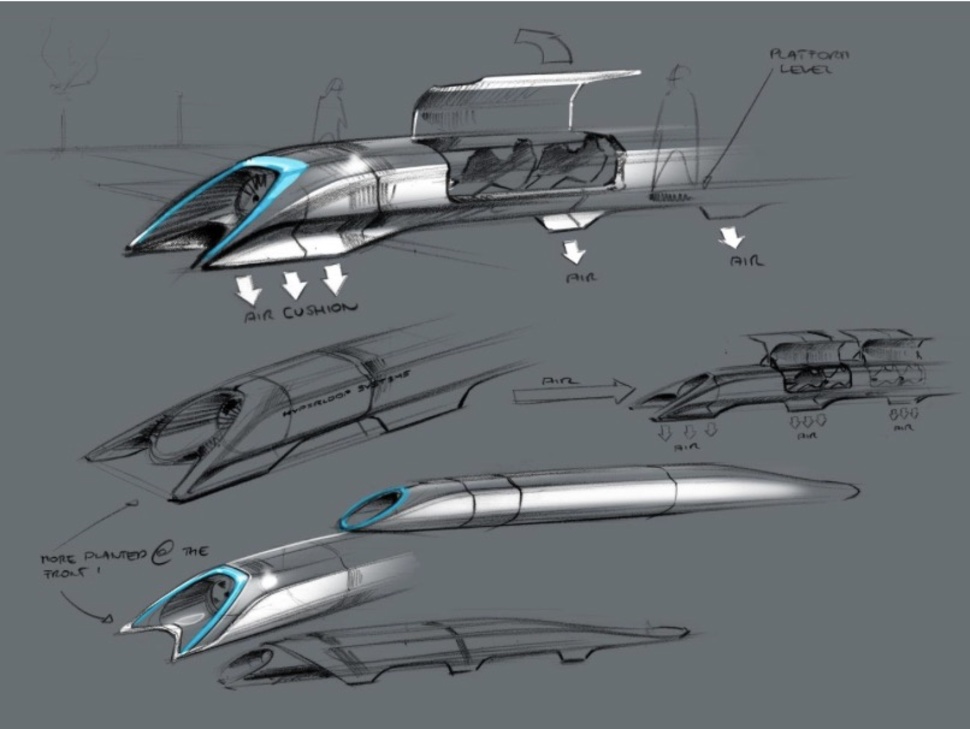
Elon Musk has started building a revolutionary new transport system dubbed Hyperloop. It will allow you to travel from Bangalore to Chennai in mere 30 minutes. Musk has likened it to a vaccum tube system in hospitals used to move medications from place to place.

Confused? No worries. Here's everything you need to know about the futuristic train coming straight out of a science fiction.


First of all, What exactly is a Hyperloop?


Hyperloop is essentially a train system that Musk calls "a cross between a Concorde, a railgun, and an air hockey table". It's based on the very high-speed transit (VHST) system proposed in 1972, which combines a magnetic levitation train and a low pressure transit tube. It evolves some of the original ideas of VHST, but it still uses tunnels and pods or capsules to move from place to place.


So, How fast can it go?


Hyperloop is being proposed as an alternative to short distance air travel, where the system will be much faster than existing rail networks and much cleaner that flight. Hyperloop isn't about going as fast as possible, because you'll have to deal with high G forces when it came to turns, which isn't ideal for passenger travel. Speeds of over 700mph are suggested for journeys.


But there are practical implications that have to be considered on a short stop-start journey, such as the acceleration and deceleration sensation that passengers would go through.


How does Hyperloop achieve such speeds?


Air bearings or maglev
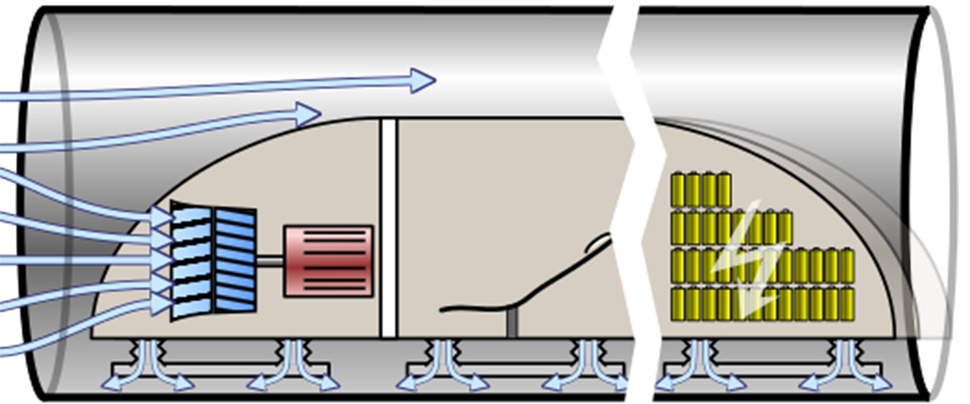
One of the biggest problems with anything moving is friction, both against surfaces and the environment the pod is moving through. Hyperloop proposes to move away from traditional wheels by using air bearings for pods instead. This will have the pod floating on air. It's similar to maglev, in which the electromagnetic levitation of the train means there is no friction like a traditional train that runs on tracks.


This is how current maglev trains can achieve super speeds, like the 500km/h maglev train in Japan. One Hyperloop proposal, from Virgin Hyperloop One, uses passive magnetic levitation, meaning the magnets are on the trains and work with aluminium track. Current active maglev needs powered tracks with copper coiling, which can be expensive.

Low pressure


Hyperloop will be built in tunnels that have had some of the air sucked out to lower the pressure. So, like high-altitude flying, there's less resistance against the pod moving through the tunnel, meaning it can be much more energy efficient, which is desirable in any transit system.

The original VHST proposed using a vacuum, but there's an inherent difficulty in creating and maintaining a vacuum in a tunnel that will have things like stations, and any break in the vacuum could potentially render the entire system useless. For Hyperloop, the idea is to lower the air pressure, a job that could be done by regularly placed air pumps.
Low pressure, however, means you still have some air in the tunnels.


The air bearing and passive maglev ideas are designed not only to levitate the pod, but also see the pod moving through the air, rather than pushing the air infront of it and dragging it along behind. The air cushion will see the air pumped from the front of the pod to the rear via these suspension cushions. The tunnels envisioned are metal tubes, elevated as an overground system.

What will it feel and sound like?


Virgin Hyperloop One said it will feel like you're riding in an elevator or a passenger plane. There will be tolerable G forces, as you will be accelerating and decelerating gradually, but there will be no turbulence. In terms of sound, people on the outside will only hear a "big whoosh". The tubes are constructed out of thick, strong steel and can handle 100 Pa of pressure or more.


Although there isn't the exact date of when this technology will be available to masses, but several tests have already been successfully conducted and we might be travelling inside these high speed vacuum pods in coming years.


China's Cashless Revolution


So often we have heard that little things can make a big difference, but what’s happening in China with the QR codes suggests that they can bring a revolution too. With mobile payments involving QR codes amounting to US$ 5.5 trillion, more than half of the China’s GDP and 50 times greater than that of the US, these little two-dimensional images made up of series of black and white squares are the x-factor in bringing the digital payments boom in China. But then again QR codes, short for Quick Response, never really took off in countries like US and France. There these barcodes are more common in social media apps like Snapchat, Facebook and Spotify.

Originally when these QR codes were created in 1994, by Denso Wave, a Toyota subsidiary they were only used to aid the manufacturing process as they helped in tracking vehicles and components. But after the creation of the barcodes they became a lesser popular choice, as barcodes offered better speed of scanning, higher accuracy, multiple functionalities and needed smaller printing area. But with these came some negative factors too, and by this time QR codes also developed with improved storage capacities and functionalities.
 A QR code is detected by a 2-dimensional digital image sensor and then digitally analyzed by a programmed sensor. The processor locates three small squares at corners of the QR code image to normalize the image for size, orientation and angle of viewing. The small dots in QR code are then converted to binary numbers and validated with an error-correcting algorithm. The encoded data can be interpreted as one of the four primary modes – numeric, alphanumeric, byte/binary and Kanji. Other forms of data can also be displayed with the appropriate extensions. Initially when this QR code technology came around it could hold only four characters and now can hold 1852 characters – enough for a few pages of information.

In China today QR codes is a part of everyday life. They are using an app called WeChat, to call cabs, make payments, text friends and other functions. WeChat’s founder, Allen Zhang is obsessed with them and frequently extols their virtues. According to a Journal “More than 95% of China’s 731 million online population access the internet via their smartphones and half made offline, in-store mobile payments in 2016”. QR code’s success in China is mainly due to large internet service provider companies like Tencent and Alibaba to bring mobile-payment capability to every vendor. The technology is easy and simple to use and transaction can be completed in any place with mobile phone signal coverage. China is turning itself into Codeconomy.

Restaurants have pinned barcode tags to the chests of waiters, waitresses and chefs so that customers can leave a tip if they are satisfied with the service. For renting a bike, anyone can just scan the code attached with it and the it’ll unlock automatically. Similarly umbrellas and batteries are rented too. This technology is also been used to identify lost pets, senior citizens and post and reply to job boards.

Simplicity of use is also one of its major drawbacks too. A scammer has to just replace the original QR with the one of his own and thanks to several do-it-yourself websites, which essentially enables anybody to create these QR’s. There have been several occurrences where scanning a malicious code lead the user into a trap set by criminals. It can lead to installation of viruses which are designed to steal money and personal information. Business owners have no choice, if they will not use these QR’s they’ll lose out on revenue. To regulate the proliferation of these types of crimes an industry standard for QR code specifications was released this July by a consortium of digital payment companies. The consortium, EMVCo, which includes biggest players in market payments like Express, Visa, MasterCard, and UnionPay. China’s love for QR code is eventually paying them well, but still a lot of efforts are needed to increase their digital payments base.


Virtual Teams: New Way To Work

Virtual Teams is a relatively new concept of replacing the conventional and boring idea of "working in confined cubicles" with "working from the comfort of your home". This being more convenient still manages to ooze out more performance out of the employees by being more efficient. So let's know a bit more about this new way of working.

First of all, what is a Virtual Team?


Virtual team can be defined as a team of people which can be working in same office or spread across various locations- which can be different cities, countries and hence different time zones too. People of varied cultures, backgrounds and expertise come together to work on a common goal. Generally virtual teams are formed for either finding solution to critical problems, development of a new product/service and the problems of similar difficulty level.

With the advent of decentralization and globalization, organizations felt the need to adapt to something which is quick and agile in solving the problems, Virtual team offers flexibility as well as fast delivery of results. Hence it has become widely popular and used extensively by organizations all over the world. Not only IT industry, but industries like construction, manufacturing, engineering, finance and the like has been seen following the trend of virtual teams.

So now that we know what a Virtual Team is, How about we get to know what advantages it has over conventional work environment.


Saves Resources

When team is working virtually from the comfort of home, one saves cost of electricity, computer, internet and other admin services and facilities.One may think how much one save can by this. But if you think about it, furniture, computer, electricity, internet expense, a good place for people to sit comfortably, then admin charges like I-cards, canteen, lunch room will add up to considerably large amount

Wide Availability of talent


 If you are not bound by one geography to look for talent then too many avenues open up and one can get excellent talent from around the world. One can look for the most cost effective resources and earn lots of profit too.

Low attrition rate

Employees enjoy working from home as they get freedom; they have a good work life balance and at the same time a satisfaction towards their work. A higher level of satisfaction makes employees to stay in company for a very long time and hence benefitting the company. Company saves a lot on recruiting and training costs and has a skillful resource working for them.

Avoids wastage of time 

Very often companies or rather teams have too many unnecessary meetings which wastes the precious resources and time. The communication and coordination between the team and having pleasantries and discussion of agenda etc eats away lots of time. Virtual teams discuss precisely and work very fast.

Reduces cost of travelling

Everyone is tired of traffic, pollution and bad weather conditions. Travelling in train or bus in summers and in heavy traffic drains half of the energy. It takes lots of time to be able to work efficiently post one reaches the office. In virtual team the time, efforts and money of commuting to workplace is saved.


Increased productivity


Employees often face distractions from gossip, unnecessary comments, office politics and the like. These distractions are ruled out in virtual team and hence help to have higher productivity.

24*7 work possible 

If company hires virtual teams from different time zones then they can work 24*7 and thereby giving a huge boost to the company revenue.

So the conclusion?


According to the social psychologists, human relationships draw their strength from the physical proximity of the individuals. Due to the fact that virtual team members have limited or, no face-to-face interactions, it throws a myriad of challenges. For the success of virtual teams, it is important to overcome the cultural differences, communication barriers, power struggles and conflict to build trust, collaboration and commitment among the individuals. Though it sounds difficult but can certainly be achieved through effective leadership. With the right strategies, processes and tools in place, organizations can benefit greatly from this new-age trend of virtual teams.

10 smart alternative uses for ordinary things(Recycling)

At a time when reusing and recycling is being increasingly promoted,it is imperative that we make maximum utilisation of those unassuming everyday products in our house to reduce waste generation and pollution. Moreover, the expensive lifestyle today demands us to be resourceful.  Here are 10 innovative uses of ordinary household items that are both creative as well as cost effective.

1.Honey:-

According to a study conducted by Imperial College, London in 2016, India has nearly 200 million adults with high blood pressure.Regular consumption of small amounts of honey has been found as beneficial in reducing systolic blood pressure due to the presence of oligosaccharides in it.

2.Toothpaste:-

If you thought that toothpaste is merely for cleaning teeth then you are definitely ignorant.The non gel toothpaste works wonders on stains in kitchen counters and sinks.Use a sponge to gently scrub and then wash it away with water.

3.Cucumber peels:-

Did you know that those cucumber peels that you would normally consider garbage have certain uses too? Cucumber peels are quite effective in reducing the ant population in your home due to alkaloid content in it. Simply keep them where the ants enter and remove them regularly.

4.Lemon juice:

Keep the aluminium shower panels,fixtures and faucets clean and shiny with the help of lemon juice.It is also helpful in cleaning glass and mirrors. Just rub a little lemon juice,leave it for five minutes and then clean it with a damp cloth.

5.String lights:-

Do you have a lot of blank walls in your home? It is time to beautify them using your Diwali string lights,clothespin,wall hooks and photographs to create an enchanting photo wall without any frames.

6.Cans:-
Instead of throwing away the old soda and soup cans and adding to the plastic waste use them as pen or pencil holders.You can paint them, embellish them, wrap them up in colourful tapes,jute ropes, ice cream sticks or fabric to get a cool stationary holder instead of having to buy one.

7.Cartons:-

Have plenty of food cartons at home? Use them to make pretty and quirky bookmarks for your collection of books instead of dog-earing the pages.Just cut them in any shape you want,cover them with some material to prevent any damage and then draw or decorate them with sequins, beads or print and paste some cool quotes.

8.Old bed sheets:-

Old bed sheets are a good alternative to wrapping paper for your gifts. Cut them in the required size,paint or embellish them and finally wrap them up with a ribbon or secure them with safety pins.This makes your gift stand out from the others and also prevents any wastage.

9.Cardboard boxes:-

Upcycle the cardboard boxes that all of us have at home instead of just heaping them in the storage.Utilise them by wrapping them in coloured paper or fabric,labelling them and using them as organisers or storage bins.

10.Newspaper:-

Instead of allowing newspapers to pile up at home,use them to create bags that are light, stylish and also contribute towards a greener earth. You can use the comic strip section,glossy or bright coloured pages.

Intuition and Business

Everyone makes many mistakes in business. But one does not have to beat himself up about them, in fact he has to be greatful to have made th...